Risks of Botox and Fillers: What You Need to Know
Botox and fillers have become so common in recent years that it almost seems obvious that nothing can go wrong. Yet they are medical treatments, and every medical treatment carries risks. Most side effects are mild and temporary, but there are also rare complications you should be aware of beforehand. In this blog, we explain the risks associated with Botox and fillers, when you should seek medical help, and how to minimize the risk of complications.
Temporary reactions
Common side effects of Botox and fillers
After both Botox and fillers, you may experience minor reactions at the injection sites. These side effects are usually mild and disappear within a few days. How your skin reacts depends, among other things, on the treatment area and your personal sensitivity.
- Redness and small bumps at the injection sites.
- Swelling, especially around the lips and under the eyes.
- Bruises.
- Tenderness or a feeling of pressure.
- With Botox, occasional temporary headaches.
Our doctors will discuss the possible side effects with you beforehand and provide you with clear aftercare instructions. That way, you’ll know which reactions are normal and when you should contact us.

Botox
Less Common Risks Associated with Botox
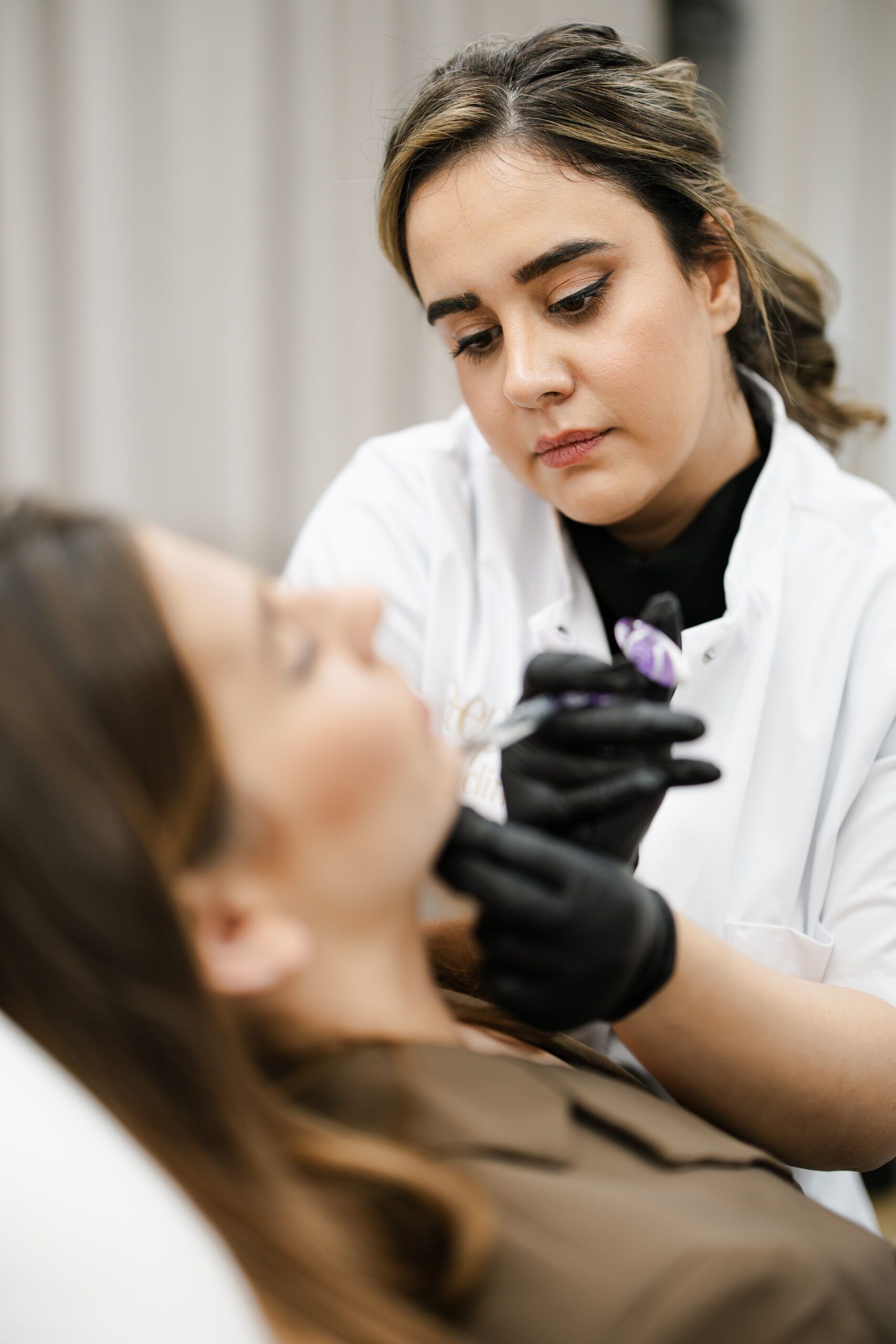
Botox contains botulinum toxin type A. This temporarily reduces the transmission of nerve signals between nerves and muscles, causing the treated muscles to contract with less force. If the medication also affects adjacent muscles, unwanted effects may occur.
- Asymmetry: for example, one eyebrow that is slightly higher or lower than the other.
- A drooping eyelid— also known as ptosis—or a heavy feeling in the forehead.
- An unwanted change in facial expressions: caused by temporary muscle weakness outside the intended area.
- An allergic reaction: this is rare, but can be serious.
The package insert also states that, in rare cases, botulinum toxin can have effects beyond the injection site. This can lead to muscle weakness and difficulty swallowing, speaking, or breathing. Such symptoms require immediate medical attention.
The effects of Botox on the treated muscles typically wear off after a few months. A drooping eyelid or an unwanted change in facial expression also usually resolves gradually. However, serious complications can have long-term consequences. That is why proper dosing, expert administration, and thorough medical screening are important.
Fillers
Less Common Risks Associated with Fillers
Hyaluronic acid fillers are used to restore volume and improve facial contours. In addition to temporary swelling and bruising, other complications may also occur, sometimes only some time after the treatment.
- Asymmetry or irregularities: the result may differ from what was expected.
- The Tyndall effect: a bluish discoloration under the skin when a hyaluronic acid filler is injected too superficially.
- Inflammation or infection: with symptoms such as increasing redness, warmth, pain, or swelling.
- Lumps or hardening: these can occur immediately after treatment, but sometimes not until weeks or months later.
- Delayed swelling: for example, around the eyes or in other previously treated areas.
Late reactions are less common, but it is important to recognize them. One advantage of hyaluronic acid fillers is that they can be broken down with hyaluronidase if necessary. This can be a solution, for example, in the event of an undesirable result or certain complications. Dissolving a filler is also a medical procedure that must be performed with care.

Serious Complications
Rare but serious: vascular occlusion caused by fillers
One of the most serious complications of fillers is vascular occlusion. This occurs when filler enters a blood vessel or when a blood vessel is compressed from the outside, reducing blood flow to the surrounding tissue. Without prompt treatment, this can lead to severe skin damage and tissue necrosis.
In areas such as the nose, the brow, and around the eyes, there is also a risk of blockage of blood vessels connected to the ocular circulation. In rare cases, this can lead to permanent vision loss. Other serious vascular complications, including stroke, have also been reported.
Severe pain, sudden skin discoloration, or changes in your vision after a filler treatment are warning signs. Seek medical attention immediately and do not wait to see if the symptoms go away on their own.
How is a vascular occlusion treated?
A doctor can minimize the risk with a good understanding of anatomy, an appropriate injection technique, and careful product selection. A cannula may offer advantages in certain situations, but it does not eliminate the risk of a vascular occlusion.
If a blood vessel is suspected of being blocked by a hyaluronic acid filler, immediate medical intervention is required. Hyaluronidase can help break down the hyaluronic acid and restore blood flow. If vision problems occur, an immediate emergency ophthalmological evaluation is necessary. However, hyaluronidase does not guarantee the restoration of vision.

Product Safety
Permanent fillers: banned in the Netherlands for cosmetic use
Permanent fillers may only be used in the Netherlands for medical or reconstructive purposes. The use of permanent wrinkle fillers for cosmetic treatments is prohibited due to the risks of long-term and sometimes difficult-to-treat complications.
At Aepril Clinics, we use only temporary fillers from recognized brands such as Restylane, Belotero, and Aliaxin. Be sure to ask any provider which product they use, what ingredients it contains, and how long the effects are expected to last. The doctor must inform you of this information in advance.
Minimizing Risks
Here’s how to minimize the risk
You can never completely rule out complications, but by carefully choosing your healthcare provider and preparing well, you can minimize the risks. Keep these five points in mind beforehand:
- Choose a licensed, qualified doctor. In the Netherlands, Botox and fillers may only be injected by a doctor with the appropriate expertise. Check the doctor’s BIG registration through the BIG registry.
- Take the IGJ’s Fillercheck. The Fillercheck helps you take a critical look at the treatment, the doctor, and the information you receive beforehand.
- Ask which product will be used. Have the doctor explain which brand and how much will be administered. Ask about the product’s origin and other details.
- Discuss your medical history. Tell them what medications you’re taking, what allergies you have, and whether you’re pregnant or breastfeeding.
- Ask about the clinic’s policy regarding complications. Discuss in advance how you can contact the clinic if you experience any symptoms, what treatment is available in case of complications, and when a follow-up appointment will take place.
Take your time to make your decision, and ask questions if anything is unclear. A good doctor will also explain when a treatment isn’t right for you.
Our Approach
How do we minimize risks at Aepril Clinics?
Every treatment at Aepril Clinics begins with a personal consultation. Our BIG-registered doctors discuss your goals, medical history, and potential risks before the treatment takes place. During this consultation, we assess whether Botox or fillers are right for you and what results you can expect.
After your treatment, you’ll receive clear aftercare instructions, and we’ll offer you a free follow-up appointment. If you have any questions, experience unexpected reactions, or have any concerns, please contact the clinic. On our page about complications and aftercare following Botox or fillers, we explain how we handle these situations.

Recognizing Side Effects
When Should You Contact Us After Botox or Fillers?
If you’re unsure whether your recovery is proceeding normally after a treatment, please contact the clinic. We’d rather check on you one more time than have you deal with symptoms for too long. Pay special attention to the following signs:
- Swelling or redness that gets worse after a few days instead of getting better.
- Fever or a warm, painful area, which may indicate an infection.
- Lumps that persist or grow larger after a few weeks.
- Asymmetry or an unexpected change in your facial expression.
- Severe pain or a sudden white, gray, or purplish-blue discoloration of the skin after a filler treatment. This requires immediate medical evaluation.
If you experience difficulty swallowing, speaking, or breathing after Botox, you should seek medical help immediately. The same applies to sudden vision problems after a filler treatment. In case of severe or acute symptoms, call 112. Do not wait for a response from the clinic if it is a medical emergency.
The Main Differences
Risks of Botox and fillers compared
Botox and fillers work differently and therefore carry different risks. The table below lists the key differences.
| Botox | Fillers | |
|---|---|---|
| How It Works | Temporarily reduces muscle activity | Adds volume or enhances facial contours |
| Common side effects | Redness, bruising, tenderness, and sometimes headaches | Swelling, redness, bruising, and tenderness |
| Less common risks | Asymmetry, drooping eyelid, or unwanted muscle weakness | Lumps, irregularities, infection, or delayed swelling |
| Rare serious complications | Spread of toxin, including swallowing or breathing difficulties | Vascular occlusion, tissue damage, or vision loss |
| Adjustment | The muscle-relaxing effect gradually subsides | In certain situations, hyaluronic acid fillers can be broken down using hyaluronidase |

Frequently Asked Questions
Frequently Asked Questions About the Risks of Botox and Fillers
Botox and fillers carry medical risks. Most side effects are mild and temporary, but serious complications can occur. With Botox, for example, these include unwanted muscle weakness and rare swallowing or breathing problems. With fillers, risks include vascular occlusion. A qualified physician and careful preparation help minimize these risks.
The effects of Botox on the muscles are usually temporary and wear off after a few months. A drooping eyelid or slight asymmetry also typically resolves gradually. In rare cases, serious complications can occur, such as difficulty swallowing or breathing. These can have serious consequences. Therefore, a doctor must assess in advance whether Botox is suitable for you.
Yes, in very rare cases, a filler can block a blood vessel connected to the blood supply to the eye. This can lead to permanent vision loss. Sudden vision problems after a filler treatment are therefore a medical emergency. Seek emergency medical care immediately and do not wait to see if the symptoms go away.
If you experience unexpected or worsening symptoms, contact your treating physician. If you experience severe pain or sudden skin discoloration after receiving fillers, you need immediate medical evaluation. Problems with vision, swallowing, or breathing require emergency care. If you have acute, severe symptoms, call 112. If you notice any warning signs, do not wait for your regular follow-up appointment.
Pricing
How much do Botox and fillers cost?
The cost of Botox and fillers depends on the treatment area, the product chosen, and the amount needed. Our pricing page lists the current prices for all treatments. During the consultation, we’ll discuss the options, risks, and costs in advance.

Would you prefer to get personal advice first?
Not sure if Botox or fillers are right for you? During a no-obligation consultation, our BIG-registered doctors will discuss your goals, health, and the risks of the treatment. You’ll receive clear and personalized advice. You’re welcome to visit Aepril Clinics in Utrecht or Hengelo.