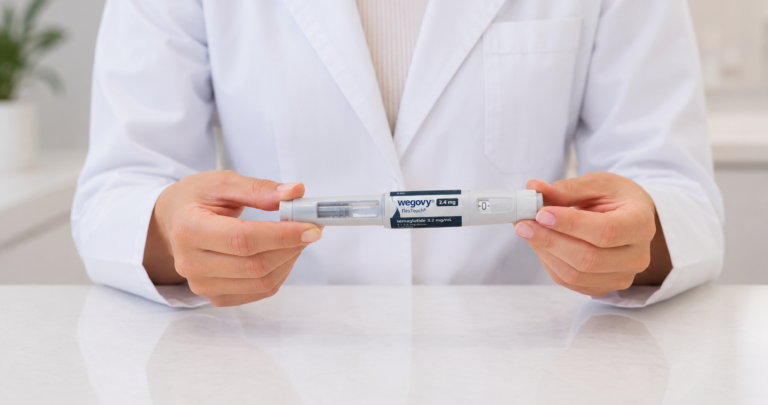
Why don’t you lose the same amount of weight every week when taking Ozempic?
One week, the number on the scale drops noticeably, while the next week, it seems like hardly anything is happening. That can be unsettling, especially if you’re losing weight for medical reasons. Still, weight loss rarely follows a straight line. In this blog, we’ll explain why you don’t lose the same amount of weight every week with Ozempic and how you can better track your progress.

Short answer
Weight loss doesn’t follow a straight line
Your body doesn’t follow a schedule where you lose exactly the same amount of weight every seven days. Even during a treatment plan that’s going well, weeks with noticeable weight loss may alternate with weeks when your weight remains virtually the same.
That doesn’t automatically mean the treatment is no longer effective. Trends over a longer period of time are much more revealing than a single measurement.
At Aepril Clinics, we therefore don’t just look at the difference between this week and last week during a treatment plan, but at the overall progress.
Important: Ozempic is approved in Europe for the treatment of type 2 diabetes. Use for the purpose of weight loss falls outside this approved indication and should always be medically evaluated and supervised.
The Scale
Your weight consists of more than just body fat
One important reason for variations from week to week is simple: the number on the scale doesn’t just show how much body fat you have.
Your body weight may change temporarily due to, for example:
- The amount of fluid your body retains;
- How much you’ve eaten and drunk;
- The contents of your stomach and intestines;
- Your menstrual cycle;
- Differences in movement and daily activities.
As a result, the scale may temporarily stop moving or even show a slightly higher reading, but this doesn’t mean your progress isn’t yielding results.

Structure
The treatment itself also evolves gradually
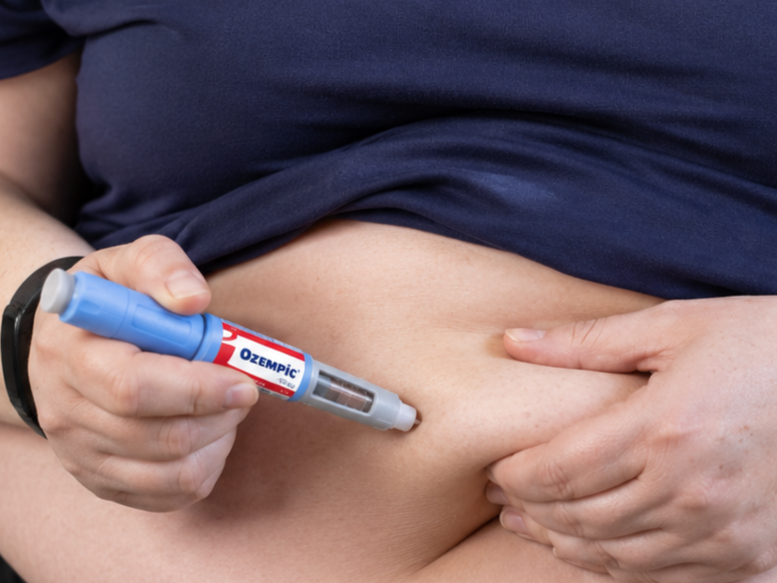
When treating patients with Ozempic, the approach is not exactly the same for every patient from day one. The dosage is carefully titrated, and each person’s response to the medication may vary.
That’s another reason why it doesn’t make much sense to compare your results directly with someone else’s. For example, one person may be further along in the treatment process than another.
In addition, people respond differently to semaglutide. A personalized treatment plan is therefore more important than a set schedule for how many kilograms you should lose each week.
Want to learn more about the medication and the medical supervision? Then read more about medical weight loss with Ozempic.
Standstill
Does a week without weight loss automatically mean you’ve hit a plateau?
No. A single week in which your weight barely changes doesn’t really tell you much about how your treatment is progressing. It’s better to assess a true plateau over a longer period of time.
The difference is important:
| What you see | How to view it |
|---|---|
| One measurement is higher | This could be a normal fluctuation in weight |
| Not much difference over the course of a week | Be sure to look at the trend over several weeks |
| No progress for a long time | A good time to evaluate the treatment plan with your therapist |
Therefore, try not to jump to conclusions or make any changes to your medication on your own after every disappointing weigh-in. Discuss any prolonged period of weight stagnation with your healthcare provider.
Progress
How can you track your results more effectively?
If you weigh yourself at random times, you’ll quickly find yourself comparing apples to oranges. For example, your weight in the evening may be different from your weight in the morning.
Do you want to track your progress as consistently as possible? If so, it helps to:
- Weigh under consistent conditions;
- Preferably choose the same time of day;
- Not just individual measurements, but above all, looking at the trend;
- To discuss your progress during follow-up visits with your healthcare provider.
The scale is a tool, not a grade for how well you’re doing. It is precisely a longer series of measurements that provides context for a week in which the results are somewhat disappointing.


Guidance
When should you discuss an unsatisfactory test result with your doctor?
A few days or a week without any change is different from a longer period during which there is hardly any progress. In the latter case, it’s wise to review the treatment plan together.
During such a follow-up appointment, you can discuss, among other things, how you are responding to the medication, how your diet and exercise routine are going, and whether your expectations still align with the course of treatment.
Never change your dosage on your own. Ozempic is a prescription medication. If you have questions about dosage, side effects, or insufficient results, please discuss them with your treating physician.
Perspective
Look at the trend, not at the perfect week
When you’re losing weight under medical supervision, it can be tempting to expect a specific result every week. But your body doesn’t follow a set schedule. A week with less weight loss doesn’t necessarily mean your progress has stalled. Instead, look at your progress over several weeks and discuss any notable changes during your follow-up appointments.
Would you like to learn more about the different options? Then check out our information on medical weight loss with injections.
Rates
How much does a medical waste disposal process cost?
The costs depend on the individual treatment plan and the medication prescribed. On our rates page you’ll find the current overview.

Questions about your progress?
Medical weight loss isn’t about seeing the exact same number on the scale every week. During a personal consultation, we’ll discuss your health, expectations, and options, and determine which treatment plan is safe and appropriate for you.